
Change of power in Dhaka: BNP's government and a new test of India-Bangladesh relations
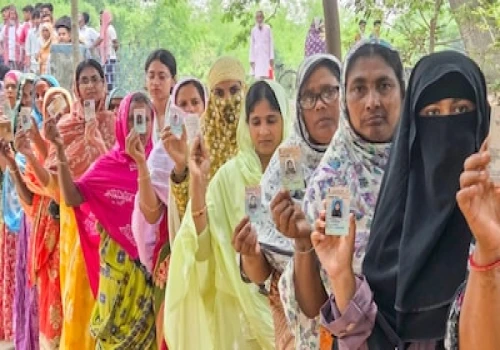
The new government led by the Bangladesh Nationalist Party (BNP) has been formed following the largely fair and peaceful national elections held on 12 February 2026 in Bangladesh. After a long time, the election atmosphere in Bangladesh was festive, which is considered unusual in the politics there. The BNP secured 212 seats in the 300-member parliament with nearly 60 per cent voting, while 50 seats of women members are to be added separately.
In this Muslim-majority country of more than 170 million, the change of power is not only seen as an internal political change, but also has far-reaching regional implications. For India—especially in the context of its eastern and northeastern terrain—this shift has brought with it many new possibilities as well as complex challenges. Illegal migration, border security and radical activities have already been sensitive points of India-Bangladesh relations.
The Siliguri Corridor, also known as the 'Chicken Neck', is often referred to for the geographical location of eastern India. Some Bangladeshi fundamentalist groups have time and again tried to portray this strategic corridor as India's weakness. Even elements fuelling concepts such as 'Greater Bangladesh' have been active, envisioning an extended Bangladesh encompassing large parts of eastern India. The debate over linking linguistic identity (Bengali) with the concept of a monotheistic state has also been emerging in this backdrop.
The 60-year-old Tariq Rahman, who became the face of the BNP's electoral victory—the son of former prime minister Khaleda Zia and former president Ziaur Rahman—kept a distance from anti-India rhetoric throughout the election campaign. Anti-India has often been a means of instant popularity in Bangladeshi politics, but Tariq Rahman avoided this path. Even after being sworn in as Prime Minister, he spoke about reviewing and balancing relations with all neighbouring countries, including India.
The rhetoric against India intensified when ousted Prime Minister Sheikh Hasina abruptly left Bangladesh on August 5, 2024, and reached New Delhi and sought political asylum along with several leaders of her party, the Awami League. The interim government led by Nobel laureate Dr Muhammad Yunus had raised the demand for Hasina's extradition as she could face the death penalty in a Bangladeshi tribunal. There was no positive signal from India. Despite this, Prime Minister Tarique Rehman refrained from making aggressive public statements against Hasina, describing it as a matter of legal process.
Bangladesh has long faced international criticism over the issue of religious minorities. Incidents of attacks on minority families in recent years have attracted global media attention. In such an environment, the victory of four non-Muslim candidates in this election is considered important.
Two of these Hindu candidates—Goyeshwar Chandra Roy and Nitai Roy Chowdhury—emerged victorious on a BNP ticket and defeated the Jamaat-backed candidates. Apart from this, Sachin Pru and Dipen Diwan also reached Parliament by winning. Prime Minister Rehman sent a symbolic but important message to the minorities by inducting Roy Chowdhury and Diwan into the cabinet.
It is also noteworthy of the fact that the population of Hindus in Bangladesh today is about 13 million, i.e. about 8 percent of the total population, compared to more than 22 percent at the time of partition. The pressure and exodus on minorities has been going on for decades and only the recent governments cannot be blamed for it.
India's response throughout the episode was swift and balanced. Prime Minister Narendra Modi immediately congratulated the BNP on its victory and became the first global leader to call Tariq Rahman. The desire to advance the mutual interests, regional peace and cooperation of the two countries was publicly expressed. Though Modi could not attend the swearing-in ceremony in Dhaka on February 17, India was represented by Lok Sabha Speaker Om Birla, which was seen as a positive diplomatic gesture.
In his last televised address as the head of the interim government, Dr. Yunus described the election as "not just a transfer of power, but the beginning of a new chapter of Bangladeshi democracy". He also stressed on the possibilities of regional cooperation with Nepal, Bhutan and North-East India. There is a lot of talk in the political circles of Dhaka that Dr. Yunus can be made the next President of the country. More than 70 percent of voters have backed a proposal to increase the president's powers in a recent referendum on the National July Charter, raising new questions about the balance of power.
It is also noteworthy of the fact that the population of Hindus in Bangladesh today is about 13 million, i.e. about 8 percent of the total population, compared to more than 22 percent at the time of partition. The pressure and exodus on minorities has been going on for decades and only the recent governments cannot be blamed for it.
India's response throughout the episode was swift and balanced. Prime Minister Narendra Modi immediately congratulated the BNP on its victory and became the first global leader to call Tariq Rahman. The desire to advance the mutual interests, regional peace and cooperation of the two countries was publicly expressed.
Though Modi could not attend the swearing-in ceremony in Dhaka on February 17, India was represented by Lok Sabha Speaker Om Birla, which was seen as a positive diplomatic gesture.
In his last televised address as the head of the interim government, Dr. Yunus described the election as "not just a transfer of power, but the beginning of a new chapter of Bangladeshi democracy". He also stressed on the possibilities of regional cooperation with Nepal, Bhutan and North-East India. There is a lot of talk in the political circles of Dhaka that Dr. Yunus can be made the next President of the country.
More than 70 percent of voters have backed a proposal to increase the president's powers in a recent referendum on the National July Charter, raising new questions about the balance of power.