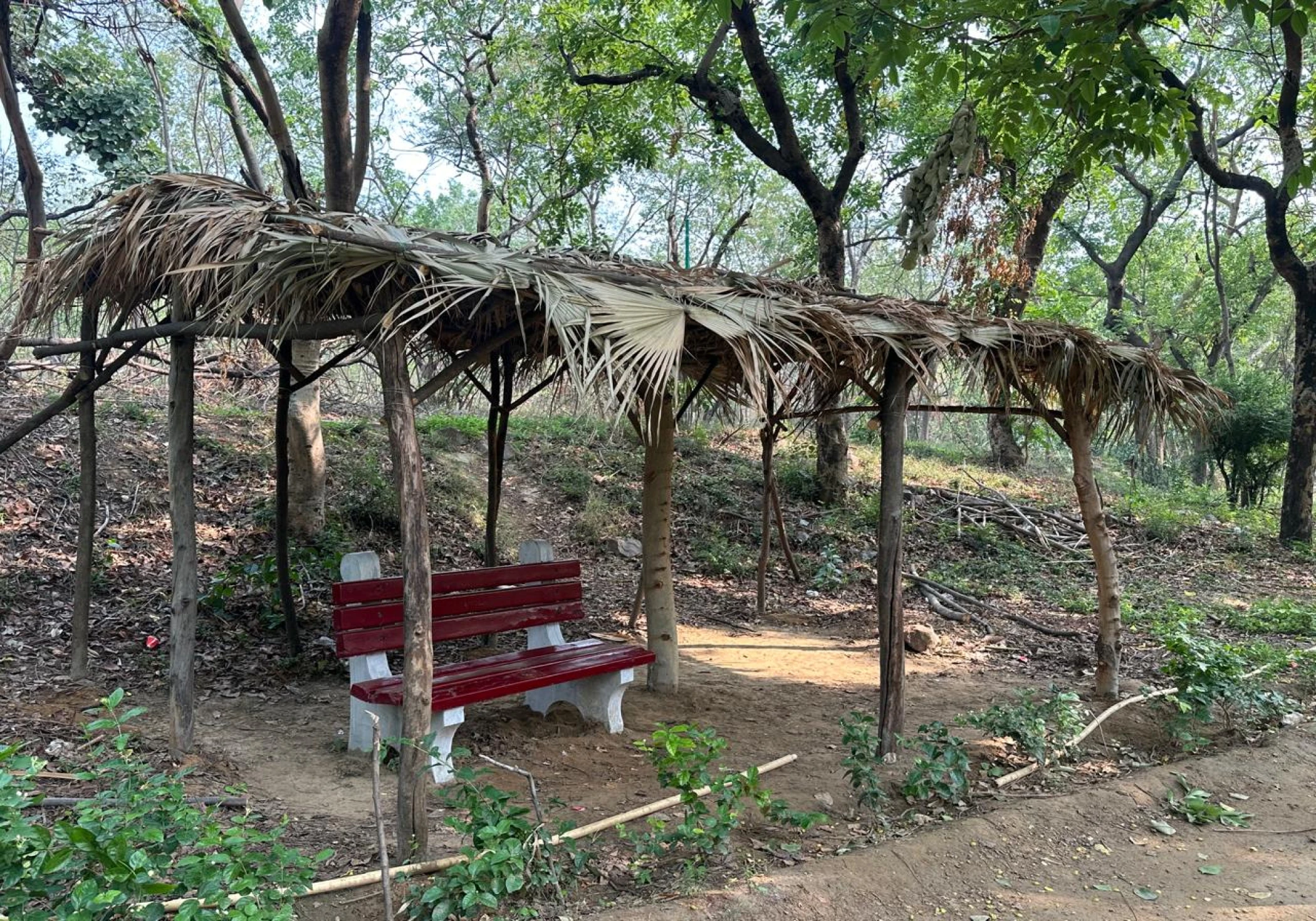
In cities filled with concrete, glass, and steel, it is easy to forget that the most beautiful building materials are often already around us. The rain shelter at Buddha Jayanti Park, New Delhi, is a small but meaningful reminder of this idea. Built entirely from waste wood and naturally fallen palm leaves collected within the park, the shelter shows how materials that would otherwise be discarded can be transformed into something useful, beautiful, and environmentally responsible.
The idea was never to build another concrete structure. Instead, the goal was to create a shelter that felt like it truly belonged in the forest. Every branch, log, and palm leaf used in the project had already completed its natural life. Rather than letting these materials go to waste, they were carefully collected, shaped, and assembled into a welcoming space where visitors can rest, relax, and reconnect with nature.
The shelter provides shade during the shiny hot summer and protection during the rain, but its real charm lies in the experience it creates. Sunlight gently filters through the woven palm leaves, the untreated wood retains its natural texture, and the irregular shapes of the branches give the structure a warmth that manufactured materials rarely achieve. Sitting under it feels less like entering a building and more like becoming part of the nature.
One of the most inspiring aspects of this project is its commitment to sustainability. No trees were cut down, no concrete or steel was required, and almost every material came directly from what the park itself had already provided. By giving new life to natural waste, the shelter demonstrates how thoughtful design can reduce environmental impact while creating something genuinely valuable for the community.
The project also draws inspiration from India's long tradition of vernacular architecture. For generations, communities built homes and resting places using materials that were locally available—wood, bamboo, reeds, and palm leaves. These structures were naturally suited to the climate, environmentally friendly, and deeply connected to their surroundings. This shelter brings that timeless wisdom into a modern urban park, showing that many sustainable solutions already exist within our own cultural heritage.
More than just a functional structure, the shelter encourages visitors to see nature differently. Materials that might once have been dismissed as fallen branches or dried leaves become part of an inviting public space. It sparks conversations about recycling, conservation, and creative thinking, reminding us that innovation doesn't always require new resources—sometimes it simply requires a new perspective.