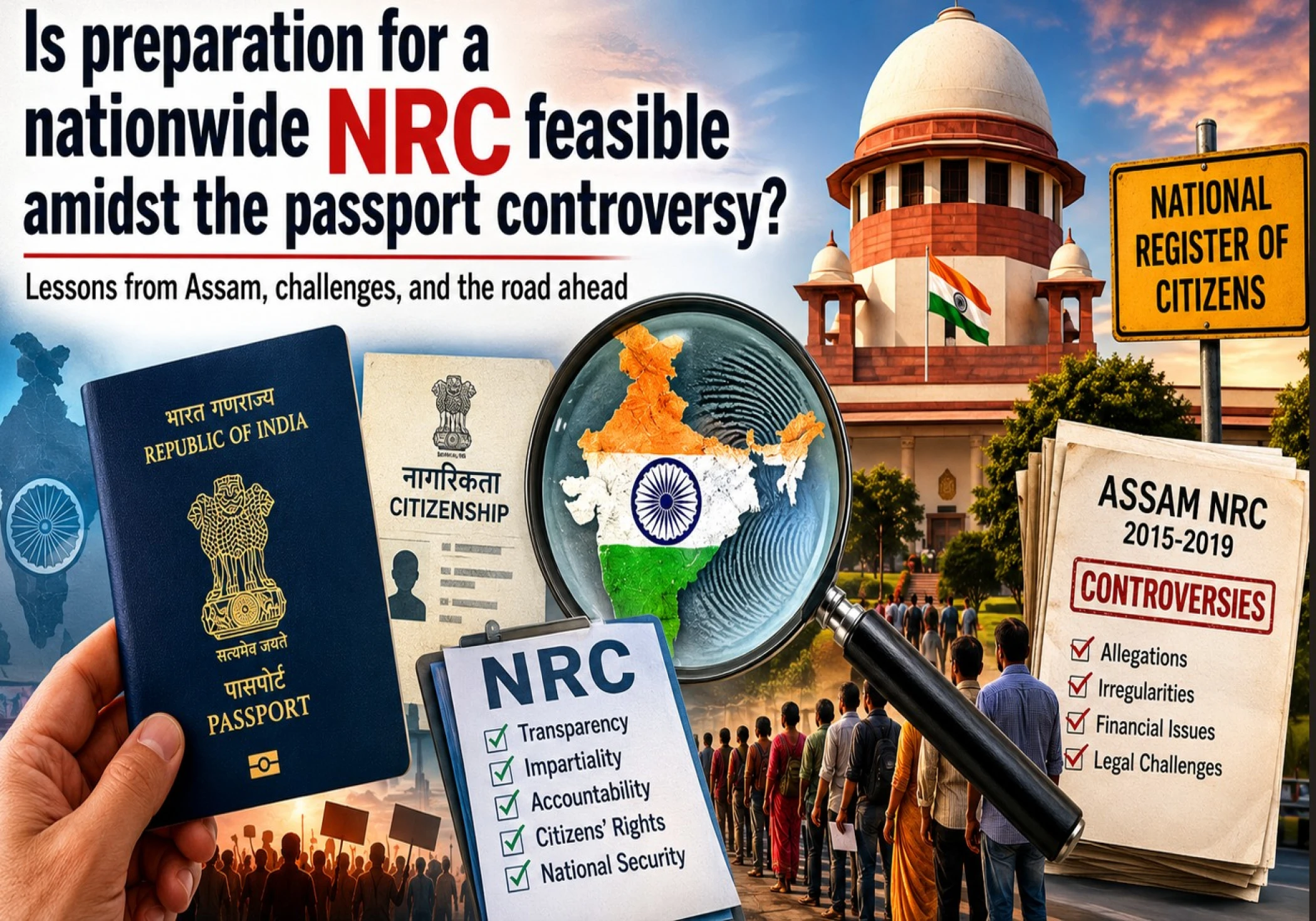
Without any provocation or significant public debate, India's Ministry of External Affairs sparked a new controversy by declaring the passport an insufficient document for establishing a claim to citizenship in this South Asian nation. On the occasion of the 14th Passport Seva Divas, observed on June 24, 2026, the Ministry of External Affairs (MEA) stated that an Indian passport should primarily be viewed only as a travel document. An Indian passport alone cannot be considered conclusive proof of citizenship, as, under existing laws, the central government can issue Indian passports to non-citizens under special circumstances.
As soon as this issue surfaced, it sparked widespread discussion across mainstream and social media. Millions began asking: if a passport—which is issued following mandatory verification procedures—is not considered conclusive proof of citizenship, then on what basis is an Indian's citizenship determined? Is a new initiative regarding nationwide citizenship verification on the horizon?
Legally, Indian citizenship is governed by the Citizenship Act, 1955, whereas passports are issued under the Passports Act, 1967. In India, citizenship is defined through the Constitution and citizenship laws. It can be acquired on various grounds, such as birth, descent, naturalization, registration, or the incorporation of territory into India. Most Indians are citizens by birth and, therefore, do not require a separate citizenship certificate. Furthermore, India does not issue a universal citizenship certificate to all its citizens.
Records indicate that less than 10 percent of India's population—exceeding 1.4 billion—holds a passport. Despite this, it remains the most trusted document for establishing a claim to citizenship. However, the Passports Act empowers authorities to issue passports to non-citizens under specific circumstances; consequently, not every Indian passport holder is necessarily an Indian citizen.
The government has already clarified that documents such as Aadhaar, PAN, driving licenses, and voter ID cards cannot be considered conclusive proof of Indian citizenship. This suggests that New Delhi might consider introducing a specific document for citizenship claims in the future—one recognized by the National Register of Citizens (NRC). However, the NRC has yet to be updated nationwide.
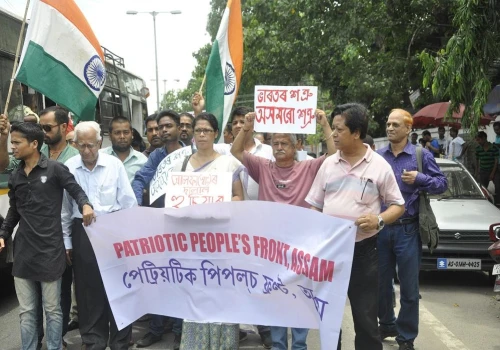
The process of updating the NRC in Assam between 2015 and 2019 was mired in numerous controversies. These ranged from allegations of financial irregularities to the inclusion of a large number of alleged illegal migrants as indigenous residents of the northeastern state. Even though the entire process was monitored by the Supreme Court, several serious questions were raised. Most surprisingly, the final draft of the NRC has not yet been certified by the Registrar General of India (RGI).
If the NRC update process is initiated across the country, it will be imperative for the government to learn from the experiences in Assam. Before proceeding at the national level, it must be ensured that the errors, controversies, and alleged irregularities that plagued the Assam process are not repeated.
The controversy began when the draft of the Assam NRC was published on July 30, 2018, and its supplementary list was released at midnight on August 31, 2019, leaving the names of over 1.9 million people off the list. More than 33 million people participated in this process. Under the Supreme Court's directive, the 1951 NRC for Assam was updated based on the cut-off date of March 25, 1971, with the aim of identifying illegal citizens.
More than 50,000 government employees and approximately 6,000 part-time workers were engaged in this entire process, for which the central government spent around ₹1,600 crore. Prateek Hajela, a 1995-batch IAS officer of the Assam-Meghalaya cadre, was appointed as the State NRC Coordinator. Shortly after the release of the NRC supplementary list, he was transferred to his home state of Madhya Pradesh amidst concerns regarding his safety in Assam. Later, the state government also granted him permission to take voluntary retirement (VRS).
The first major revelation came from Hitesh Dev Sarma, who succeeded Hajela as the State NRC Coordinator. He alleged that the entire process was compromised through software tampering aimed at including a large number of illegal migrants—specifically Bangladeshi Muslim settlers—in the list. According to Dev Sarma, himself a retired IAS officer, Hajela also compromised a crucial verification process known as "family tree matching." On these grounds, he demanded an investigation by the National Investigation Agency (NIA) and the Directorate of Enforcement (ED) against Hajela and his associates.
The Assam Police has not yet registered a case based on Dev Sarma's various complaints. However, his allegations regarding financial irregularities gained credence when the Comptroller and Auditor General (CAG) of India also pointed to financial discrepancies amounting to ₹260 crore during the NRC update process. In its report for the year ending March 31, 2020, the CAG recommended penal action against the then State NRC Coordinator, Prateek Hajela, and Wipro Limited, which had served as the system integrator.
Assam Chief Minister Himanta Biswa Sarma has also publicly acknowledged that the NRC was flawed. He maintains that a defective NRC could pose a threat to national security and adversely affect the interests of the state's indigenous population.
Recently, the Supreme Court admitted a writ petition seeking a comprehensive re-verification of the NRC. In this petition, Hitesh Dev Sarma—acting both in his personal capacity and as a representative of a large number of indigenous people of Assam—has sought the preparation of an error-free NRC through a time-bound verification process. The Supreme Court has already issued notices to the Central Government, the Assam Government, the State NRC Coordinator, and the Registrar General of India (RGI), seeking their responses.
These developments also underscore the gravity of the allegations leveled against individuals who played pivotal roles in a process that was conducted and subsequently overseen under the direct supervision of the Supreme Court itself. Should steps be taken to implement the NRC across the country in the future, it would be imprudent to proceed without an impartial review of the experiences and controversies that emerged in Assam.
Another serious issue came to light during this long process. Temporary employees appointed as Data Entry Operators (DEOs) never received remuneration in accordance with legal standards. These DEOs were offered between ₹5,500 and ₹9,100 per month—an amount lower than the statutory minimum wage in the country. In contrast, Wipro, acting as the system integrator, was paid ₹14,500 per month for each DEO.
Even after deducting the system integrator's legitimate commission, the total amount involved in the misappropriation is estimated to exceed ₹1 billion—funds that should have gone to Wipro or its subcontractor, 'Integrated Systems and Services'. With few exceptions, the majority of the media in Assam refrained from reporting on the financial irregularities that surfaced during this entire process.
Moreover, most local media personnel propagated the misinformation—for reasons best known to them—that the NRC's supplementary list was the final list and that there was no scope for any further verification. At least one television host in Guwahati openly advocated for accepting that very list as final, without any re-verification.
Later, his name surfaced on social media among the alleged beneficiaries of the NRC update process, drawing criticism. However, despite being known for his aggressive stance, he never publicly responded to these allegations and has remained silent to this day. He even authored a book praising Prateek Hajela’s efforts, describing his work as unparalleled. The objective behind this may well have been to carve out a distinct national identity for Hajela, who had transitioned from a technocrat to a bureaucrat.
When viewed holistically, these developments make it evident that the NRC update in Assam was not merely an administrative exercise but a process that left many critical questions unanswered. Allegations of financial irregularities, questions regarding the verification process, observations by the CAG, objections raised by the state government, and the demand for re-verification currently pending before the Supreme Court—all indicate that a fair and comprehensive review of this entire exercise is yet to take place.
If New Delhi is indeed contemplating implementing the NRC across the country, it must first learn from the experiences in Assam. The credibility of any national citizenship verification process will be determined not merely by its objective, but by its transparency, impartiality, accountability, and flawless implementation.
The experience in Assam demonstrates that disputes and serious allegations can arise even in a process conducted under judicial oversight. Therefore, it is essential that any future system addresses these shortcomings to ensure that the rights of Indian citizens are not compromised and that objectives related to national security are not called into question.
Only an impartial and time-bound inquiry can clarify what actually transpired during the NRC update in Assam, who was responsible for the alleged irregularities, and how a recurrence of such situations can be prevented in the future. If satisfactory answers to these questions are not found, any potential initiative to implement the NRC nationwide will face the same issues that Assam has been grappling with for years.