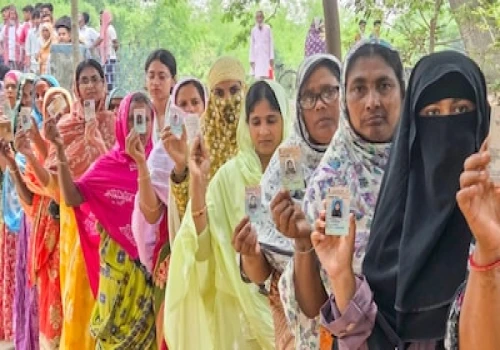
The upcoming voting for the 126 assembly seats of Assam on April 9, 2026, is going to write a decisive chapter in the politics of the state. Around 2.5 crore voters will participate in this election, and their decision will not be limited to the formation of the government but will decide what balance Assam prefers between development, security, and cultural identity. The counting of votes will take place on May 4, but the electoral scenario has already become fully active and competitive.
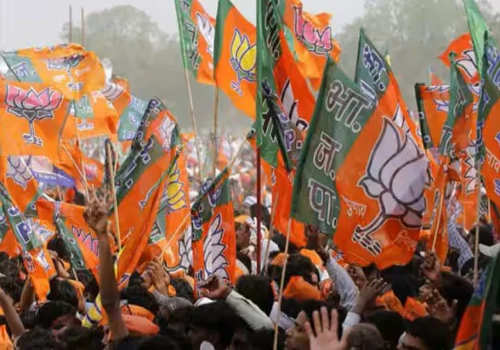
The ruling Bharatiya Janata Party (BJP) led by Chief Minister Himanta Biswa Sarma is trying to return to power for the third consecutive term. In its 'Sankalp Patra', the party has stressed on the continuity of welfare schemes along with furthering development and economic activities. The BJP claims that over 1.6 lakh government jobs were given in the last term and two lakh more jobs will be created in the next five years.
Under 'Arunodaya Yojana', about 40 lakh women have been given financial assistance and so far about Rs 17,000 crore has been disbursed. Besides, giving land rights to tea garden workers and expanding social security schemes are being presented as achievements of the BJP.
The BJP has also raised security and identity issues prominently. Action against illegal migrants, use of provisions of the 'Migrants (Expulsion from Assam) Act 1950', promise to enact a Uniform Civil Code and enactment of laws on issues like 'love jihad' and 'land jihad' are clearly influencing the election discourse. Campaigns against malpractices like child marriage and polygamy are also being presented as social reforms.
On the other hand, the Indian National Congress and its allies are trying to turn this election into a mandate against the regime. By releasing the 'people's charge sheet', the Congress has accused the BJP government of corruption, breach of promises and administrative failure. The party says that unemployment, inflation and economic imbalance have affected the general public.
The opposition alliance includes regional parties like the Assam Jatiya Parishad and Raijor Dal, which are working on a strategy to capitalise on anti-incumbency against the BJP. However, the AIUDF's presence remains a challenge for the Congress in some seats, leaving the possibility of fragmentation of opposition votes.
The recent defections and discontent over ticket distribution have also complicated the electoral equations. With the defection of many leaders, the contest has become triangular in some seats. Constituencies like Dispur, Jorhat and Sibsagar are likely to witness a tough contest.
In Jalukbari, Chief Minister Sarma's position is considered strong, while in Jorhat, there is a direct contest between the BJP and the Congress. In Sibsagar, Raijor party leader Akhil Gogoi is also in the news for the challenge. Local issues, candidates' image, and organizational ability can play a decisive role in these areas.
An important aspect of this election is the role of civil society. More than 200 intellectuals, academics and social organizations have appealed to voters to vote keeping in mind security, cultural identity and development. He stressed on the changing nature of population, conservation of natural resources, and the need for strict policies against drug abuse. The Rashtriya Swayamsevak Sangh (RSS) has also appealed to the voters to vote maximum and exercise their franchise keeping in mind the national interest.
Overall, the Assam election 2026 has become a multi-faceted political struggle. While the BJP is seeking a mandate on the basis of its development work, welfare schemes and stability of the leadership, the Congress and its allies are among the people demanding change and accountability. Now it is up to the voters whether they prioritize stability and continuity or change and new direction. The mandate that comes on May 4 will not only form the new government but also decide in which direction Assam will move in the coming years.