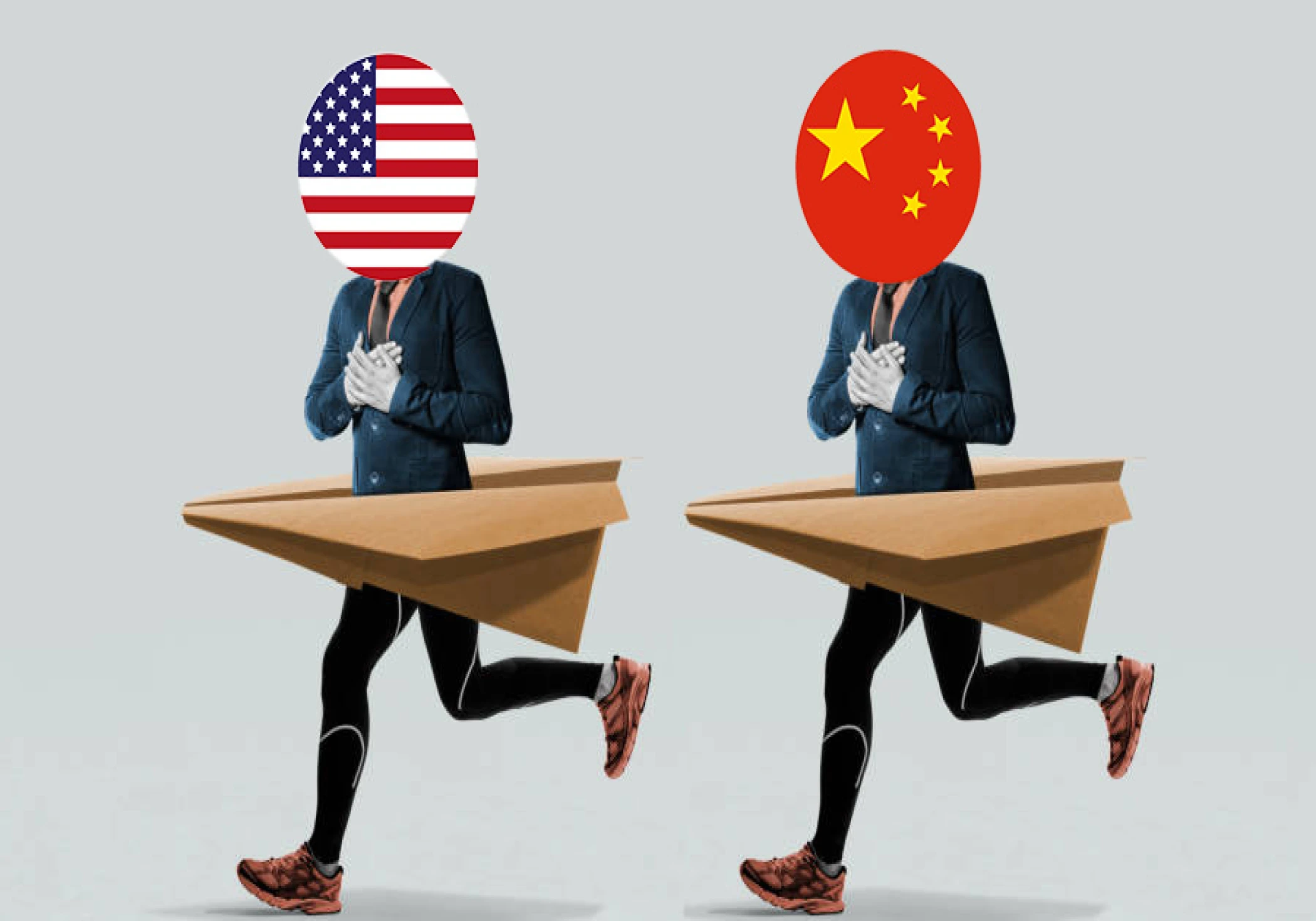
The race for technological supremacy between the US and China has entered a new phase with generative AI taking center stage. This powerful technology can create realistic text, images, and even code, making it a game-changer for various industries. However, the road to dominance is not without its hurdles.
China Lags Behind but is Catching Up. While the US boasts OpenAI, a leading research lab in generative AI, China currently lacks a comparable competitor. This gives the US a significant head start. However, China is rapidly closing the gap. Chinese tech giants like Baidu and Alibaba are pouring resources into developing their own generative AI models. Baidu's Ernie Bot, for instance, has garnered 100 million users within a short period, showcasing China's potential for rapid adoption.
The Chip Factor: A Double-Edged Sword. Nvidia's dominance in the high-end AI chip market presents a challenge for China. These chips are crucial for training complex generative models. While China strives for domestic chip production, its reliance on foreign hardware remains a vulnerability. However, the chip shortage has a lesser impact on applying AI to specific applications, like computer vision, where China is making significant strides.
Open Source vs. Homegrown Innovation. Many Chinese developers leverage open-source generative AI models like Meta's Llama. This fosters collaboration but raises concerns about quality control, security, and potential misuse. China is also fostering indigenous innovation with companies like Moonshot AI building advanced generative models. Additionally, former Google China president Kai-Fu Lee's open-source model, 01.AI, demonstrates China's commitment to homegrown solutions.
The Race for Talent: A Mixed Bag. The US holds an edge in attracting top AI talent from around the world. However, China leads in producing homegrown AI researchers with undergraduate degrees. Additionally, a significant portion of top-tier researchers working in the US hail from China.
The Looming Split: Two Separate AI Ecosystems?
Geopolitical tensions are leading to a potential split in the generative AI landscape. US restrictions on AI chip exports and bans on platforms like ChatGPT in China could result in the emergence of two distinct ecosystems, hindering collaboration and hindering progress.
Who Will Win the AI Race? It's Complicated
While the US has a current lead with OpenAI, China's rapid advancements, vast user base, and focus on specific applications cannot be ignored. The "real killer app" for generative AI might lie in businesses willing to integrate this technology for practical applications. Companies like Alibaba integrating AI into e-commerce and Huawei developing AI for specific industries are prime examples.
The race for generative AI supremacy is far from over. Both the US and China possess unique strengths and weaknesses. Regulations, talent pool, access to advanced chips, and the ability to foster a healthy and responsible AI ecosystem will all play a crucial role in determining the ultimate winner.